Choose a building set when you want reusable pieces for different creations. Choose a model kit when building one particular subject is the attraction. If you want a finished display, either can work: a brick-built flower does much the same job on a shelf as a wooden car or a character model.
So compare exact boxes, not LEGO against every other brand. A free-building assortment, a display-focused brick model, and a poseable character kit ask for different work and give you different reasons to come back after the build.
Note: This guide is researched, not hands-on tested. We checked manufacturer information and public builder discussions on October 5, 2026. The five products below show different choices; they are not a ranking, and including a brand does not mean we work with it.
What is the real difference between a building set and a model kit?
Reusable parts, or one finished object
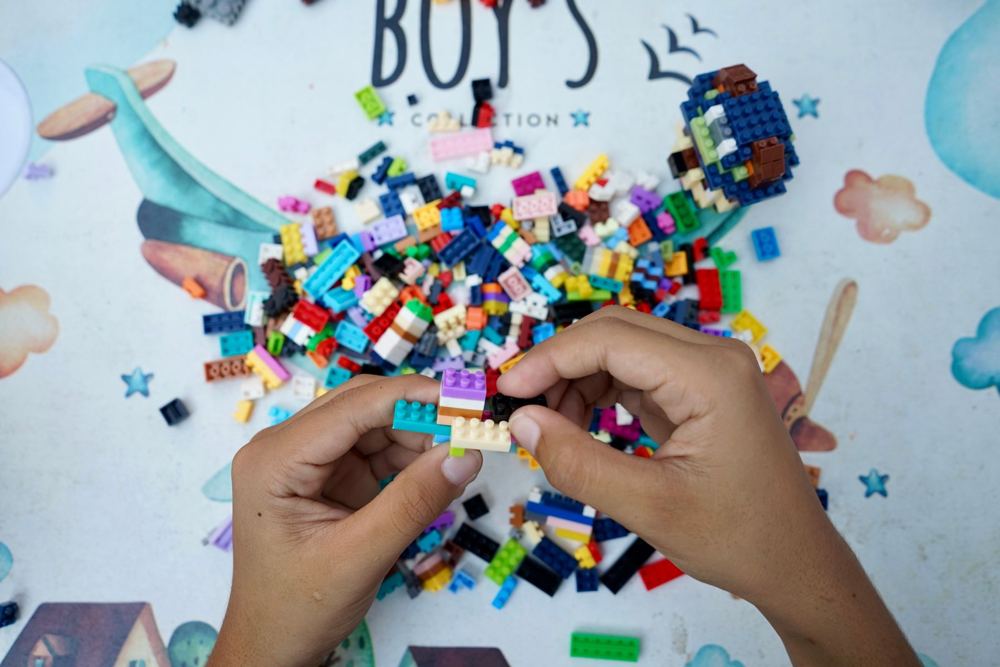
A reusable construction system makes sense when the next project matters as much as this one. You might follow the booklet today, take the model apart next month, and use the pieces for something unrelated. An assortment helps most when you have ideas but haven’t settled on a subject.
A model kit gives the session a clear destination. Its parts are chosen for one car, robot, aircraft, or scene, and the subject is usually the reason to buy it. Someone who wants that exact character on a shelf may have no interest in turning it into anything else.
These are buying priorities, not dictionary definitions. A LEGO display model is still made of reusable bricks, and some model builders combine kits. The useful question: do you want general-purpose material, or a satisfying route to one chosen result?
Building is not the same as playing afterward
Take someone who likes robots. They might want to build one, pose one, or change one into a vehicle. Those are three different purchases. A finished figure skips the assembly; a kit makes assembly part of the gift. Neither automatically gives you the movement or toughness the buyer imagines.
In an r/Gunpla thread about moving from LEGO to Gunpla, builders describe the switch from rebuilding with pieces they own to buying a new kit for each subject. That’s a preference, not proof either hobby is better value. Before ordering, picture week two: will you be changing the creation, choosing a pose, or leaving it on display?
How do you compare the work before buying?
Look at how the parts connect
Brick building asks you to find pieces, orient them, and connect them in order. A model kit may also press parts together, but that doesn’t tell you how the parts arrive, how you separate them, or whether the finished model is meant to come apart again.
Some plastic kits supply parts on a frame, called a runner or sprue, so removing a part is its own task. Other kits come with pieces ready to use. Wooden kits bring a different material and fit; a trick that works on a plastic joint may be wrong for a thin wooden tab. Read the first instructions before separating anything.
Tip: The most useful preview is a page from the middle of the manual. Later steps show repeated assemblies, tightly spaced parts, orientation changes, and sections that become hard to reach once something else is attached.
Separate required assembly from optional finishing
A tutorial may include painting, panel lining, sanding, or replacement decals. Not everything on the creator’s desk is needed to build the product. Decide whether you want the model as supplied or a custom finish, then check the manual for the minimum.
In an r/Gunpla thread about a difficult first build, the questions are about breakage, stickers, and which supplies to buy. Answer those for the exact kit. They don’t justify one shopping list for every model, or a promise that any model will go together easily.
Judge difficulty by tasks, not piece count
A big count can mean many familiar, repeated connections. A small count can still need careful handling and precise alignment. Counts also describe different kinds of parts across brands, so cost per piece is a weak way to compare a brick assortment with a character kit. Check these instead:
- Can you tell the parts and their orientation apart in the instructions?
- Does standard assembly need a tool or material you don’t have?
- Can you stop at a clear stage and store the unfinished project?
- Are you comfortable with the preparation and finishing this exact kit needs?
Leave time to fix mistakes. A maker’s estimated build time is a planning reference, not your deadline, and a short video usually skips sorting and retries.
Five products where the categories overlap
These are examples of different goals. Their ages, parts, and assembly methods are not a brand-wide difficulty ranking, and an age label doesn’t tell you how much help one builder will need.
| Product |
Age and pieces |
Assembly fact |
Main reason to choose it |
| LEGO Classic 10696 |
Ages 4–99; 484 pieces |
Reusable bricks and build ideas |
Many different creations |
| LEGO Daisies 11508 |
Ages 9+; 133 pieces |
Brick-built flowers |
A decorative build |
| Blokees Classic Class 01 Optimus Prime |
Ages 12+; 83 parts |
No glue, brushes, or cutters needed |
Building and posing a character |
| BANDAI ENTRY GRADE 1/144 ν Gundam |
US age and count not confirmed |
Touch-gate parts come off by hand |
One specific Gundam model |
| ROKR Vintage Car MC801 |
Ages 14+; 298 pieces |
Wood; 190 × 92 × 115 mm built |
A vintage car for display |
LEGO Classic Medium Creative Brick Box 10696

Image: LEGO product page.
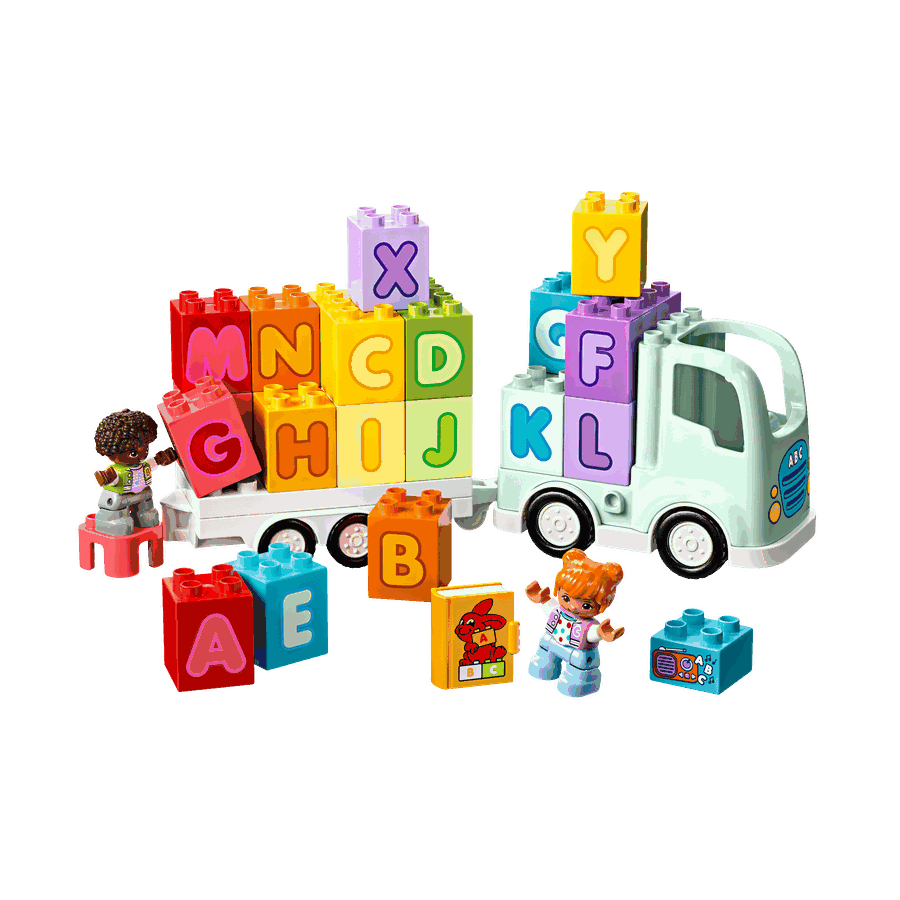
For reusable material, pick an assortment rather than a box built around one subject. LEGO lists 484 pieces, ages 4–99, a plastic storage box, build ideas, and parts such as wheels and windows. US list price was $34.99 when we checked on October 5, 2026.
You can start with the supplied ideas and later pick a different goal without keeping the first model intact. A builder who likes making small vehicles and changing them may get more from this than from a kit for one specific car. Our building set picks list more options like it.
Keep in mind: An assortment won’t have enough of every part for the big project you imagine, and it doesn’t give you the visual payoff of a detailed licensed kit. Buy it for building material, not because 484 looks generous beside a kit with fewer parts.
LEGO Botanicals Daisies 11508

Image: LEGO product page.
LEGO Daisies 11508 our review has 133 pieces, is labeled 9+, and is presented as decor. It’s a good counterexample to the idea that building sets are always for free play and models are always for display.
The bricks are still a construction system, but most buyers will keep the flowers rather than tip them into a parts bin. If you want a small decorative build and like the subject, that’s a fine way to use a building set. You don’t need to collect poseable figures to enjoy building a display.
Keep in mind: Don’t buy flowers as a starter assortment for building cars. The fair comparison is another finished object you’d enjoy looking at, not which brand gives the most pieces per dollar.
Blokees Classic Class Optimus Prime 01 Rise of the Beasts

Image: retailer product page.
For someone who wants this version of Optimus Prime, the Blokees listing gives 83 parts, ages 12+, ABS plastic, and 20 movable joints, and says glue, brushes, and cutters are not needed.
This is a character-led choice: build a recognizable figure, then pose it. It shows that a model kit doesn’t have to mean painting or a big tool purchase, and that a lower part count isn’t less value when the recipient cares about the character. See our model kit picks for more kits like this.
Heads up: If converting between robot and vehicle matters, don’t treat the Transformers name or movable joints as proof. The listing describes building and posing; confirm conversion for the exact product. The package size is not the built figure’s height.
BANDAI SPIRITS ENTRY GRADE 1/144 ν Gundam

Image: BANDAI SPIRITS.
For a first character kit with a different system, look at the standard ENTRY GRADE 1/144 ν Gundam. BANDAI SPIRITS’ product page describes touch-gate parts you can remove by hand without nippers, and lists a beam rifle, shield, and marking stickers. The matching manual record gives product number 2607515.
It’s a specific way into model building that doesn’t assume all Gunpla needs the same tools. Don’t carry the touch-gate claim over to other grades or to other ν Gundam releases. The standard version is also different from special-color editions and bundles with extra equipment.
Keep in mind: Our sources don’t confirm the current US age label or a US price, so use the seller’s packaging and listing for those. For a gift, check the listed accessories rather than a photo of someone’s customized build. A scale ratio is not a shelf measurement.
ROKR Vintage Car MC801

Image: Robotime product page.
ROKR Vintage Car MC801 is a wooden car with 298 pieces, recommended for ages 14+. Robotime lists a built size of 190 × 92 × 115 mm and a four-hour build estimate. That estimate is the maker’s, not a time we measured.
It suits someone who likes the look of a vintage car and the process of fitting wooden parts. It also widens the comparison beyond plastic bricks and plastic characters: material can decide the purchase when two subjects appeal equally.
Keep in mind: Treat it as a display project, not a powered mechanism or a car for rough play. Don’t assume features from other ROKR kits. Read the instructions before buying tools, glue, or finishing supplies.
Which one fits the person who will build it?
A child who wants to change the creation
Start with an age-appropriate reusable set if the child regularly takes things apart to make something else. A favorite character may grab attention, but a fixed character kit can disappoint a child who expects its parts to become a house, then a truck, then a robot.
Use the product’s age guidance and warnings as the boundary. The U.S. Consumer Product Safety Commission advises matching toys to a child’s interests and abilities and keeping toys with small parts away from children under 3. An older sibling’s project needs storage a younger child can’t reach.
A family building together
Decide what taking part means before choosing the box. With an assortment, everyone can invent something separate and compare. With a step-by-step model, one person may have to finish a section before the next can continue. That changes how you run the session, not whether the model is a good choice.
For a child-led project, give the child tasks they can own and step in where the instructions need it. Otherwise a “shared activity” gift can turn into an adult build the child watches.
A character fan or collector
Confirm the exact version and how it will be used. A collector may care about a particular film design, accessories, or how it sits beside figures they already own. An easy build is still an unwanted gift if it’s a duplicate or the wrong version.
If they want posing, check the joints and stand. If they want conversion, look for an explicit feature description. If they want to play right away, ask whether assembly is welcome. “Collector” doesn’t mean they want the biggest or most complicated box.
An adult looking for a quiet project
Interest in the subject is a better starting point than the idea that one category is more grown-up. Flowers, wooden cars, and fictional robots all appeal to adults. In an adult beginner thread comparing LEGO and Gunpla, people asked about decorative sets and tools in the same breath, which shows how different the goals can be.
Decide whether you want assembly alone or finishing work too. If you want a contained project now and then, fewer supplies is better. If you enjoy painting, a kit with more preparation may be the point. Neither requires an advanced kit to prove the hobby is worth it.
What will the whole project cost?
Compare two totals: what it costs to finish standard assembly, and what any optional finish would add. A painted example online may involve supplies the model doesn’t need as sold. Keeping the totals apart stops one small purchase from turning into an unplanned workshop.
| Cost or commitment |
Check before checkout |
| Product and delivery |
The seller’s actual total, including tax where it applies |
| Required supplies |
The manual and what comes in the box |
| Optional finish |
A separate budget for customizing, not a requirement |
| Space between sessions |
Where loose parts and half-built sections will stay |
| Support after purchase |
Return terms and how missing parts are replaced |
Count future use honestly. Reusable pieces only add value if you’ll actually rebuild; a brick model you keep intact on a shelf works more like a display kit, which is fine. A model kit can stay satisfying through display, posing, or a later finishing project. And a box bought because it was cheap can become an unfinished chore if you don’t like the subject.
Bottom line: Price the project you intend to finish, plus the table space it needs between sessions, not just the box.
Articulation means parts move relative to each other: a figure can bend an arm or turn its head. Transformation means the product changes between defined forms. A poseable robot doesn’t gain a vehicle mode because its character has one. An r/Transformemes thread about non-transforming figures shows how common that expectation is.
The same goes for vehicles and mechanical models. A pictured wheel isn’t evidence of a motor, and a brand that sells moving mechanisms may also sell static display pieces. Count only the functions the exact listing and instructions describe.
Glue-free doesn’t mean endlessly rebuildable
A kit that goes together without glue may still use parts shaped for one spot. Check whether the maker intends repeated disassembly before treating it like a box of bricks, and don’t assume a tight joint is meant to be pulled apart often.
If you want to change the subject again and again, a reusable building system is the clearer choice. If you want to keep the subject and change the pose now and then, a character kit may suit you better.
Customizing is its own commitment
Changing colors, adding details, or combining parts can be fun, but it changes the project. A modification you saw online isn’t a guarantee the same method suits your version. If the supplied look appeals to you, finishing can wait until you know you enjoy the build.
Your checklist before checkout
Write down what would make the purchase a success: several creations from the same pieces, an accurate version of a character, or a decorative object you enjoyed building. Then check:
- The activity after building: rebuilding, posing, conversion, display, or a documented mechanism. If two matter, confirm both.
- The exact product and version: model number, series, accessories, and whether it’s a named item, a random box, or a bundle.
- The first instructions and a later page: required tools, preparation, warnings, and a good place to stop the first session.
- The finished footprint and space for an unfinished build, including poses and accessories, not the box size.
- The checkout total, essential supplies, and the seller’s return and missing-part process, especially for a gift.
Start with the box that fits the activity you want. You can move into another material or more finishing work once you know which part of the process you enjoy. New to all of this? Read how to choose your first building set, or see more guides on the ToyNoble home page.
Blokees examples of a finished character build
These two named Optimus kits illustrate a focused model build. Classic Class 09 follows Transformers (2007); Classic Class 11 follows Transformers One. The character is the same, but the movie design and parts differ. Both researched listings carry 12+ labels.
A character model can be a satisfying short project and a lasting shelf display. It will not provide the same open-ended building system as a tub of bricks. Decide whether the recipient wants to pose one recognizable figure or keep dismantling and inventing new builds.
Affiliate disclosure: We may earn a commission when you buy through the Blokees links on this page. ToyNoble does not add a fee for using these links. The seller sets the final price, shipping and any discounts. How our links work.

Ages 12+. Transformers fans after a quick, light-up build.
- Series: Transformers Classic Class 09
- Film: Transformers (2007)
- Pieces: 88
Check the named edition and included parts on the selected listing before buying.
Keep in mind: The lights use batteries; Blokees says to keep them away from young kids
Check current price at Blokees Affiliate link
Read our researched review

Ages 12+. Transformers One fans who want Optimus.
- Pieces: 79
- Height: About 5 in
- Series: Transformers Classic Class 11
Check the named edition and included parts on the selected listing before buying.
Keep in mind: Head turns but does not look up or down, per one owner
Check current price at Blokees Affiliate link
Read our researched review
Read the listing for the selected package, local availability, shipping and returns before paying. Price and stock can change after our research date.
FAQs
Is LEGO a model kit?
A LEGO set can build a model, but “brick building” and “model kit” aren’t mutually exclusive. Focus on what the product is for. An assortment like LEGO Classic gives you pieces for many creations; a flower set gives instructions for one display, even though its parts are still bricks. That affects what you can expect after the first build. If you want a finished decorative object, compare a brick model with a wooden one. If you want reusable pieces, compare assortments. Before buying, ask whether you’d keep the finished object or take it apart for something new. That answer is more useful than sorting every box from one brand into a single category.
Are model kits harder than building sets?
Not automatically. Difficulty depends on the tasks in the exact kit, the instructions, and the builder’s experience, not the category name. A brick model can involve many similar parts and careful orientation. A character kit can skip tools and still ask you to track numbered parts. A wooden model brings a different material and connection method. To judge a specific box, preview a page from the middle of the manual, check whether standard assembly needs cutting, glue, or finishing, and look for clear stages where you can stop and store the project. Don’t read a low part count as an easy build, or a big box as a bad first purchase.
Do all model kits need glue, paint, or cutters?
No. Requirements vary by product, and optional finishing should stay separate from standard assembly. The Blokees listing above says cutters, glue, and brushes aren’t required, and BANDAI describes touch-gate parts on the standard ENTRY GRADE ν Gundam that come off without nippers. Those statements apply to those named products, not every kit from either maker. For anything else, check its own instructions and contents. List only what you need for the result the maker describes, and keep painting, detailing, and aftermarket parts in a separate optional budget. A tutorial can explain a step, but the creator’s equipment shouldn’t become your shopping list without a reason tied to your kit.
Don’t assume it will. The Transformers name identifies the character; transformation has to be confirmed as a feature of the exact product. Movable joints, swappable accessories, and posing photos don’t show conversion. The Optimus Prime listing above describes building and posing a figure, so don’t buy it expecting a truck mode. Other products may differ, which is why a brand-wide answer isn’t reliable. Confirm the full model name and version, look for an explicit statement about conversion with photos of the same item in both modes, and ask the seller if anything is unclear. If transformation is the main reason for the gift, leave a product off the list until that’s settled.
Can I take a snap-fit model apart like LEGO?
Don’t treat glue-free assembly as a promise of repeated disassembly. How a model connects and how it’s meant to be used are separate questions, and your exact model’s manual should guide handling. Some assemblies let you correct a step or open a section, but that doesn’t mean every joint is designed to be pulled apart often, and some parts become hard to reach after later steps. Avoid improvised prying or a separation method copied from another model. If taking things apart and rebuilding is central to what you want, choose a construction system made for reuse. If you want a recognizable display model, you may not need that at all.
Does a higher piece count mean better value?
Not across these categories. Pieces differ in size, shape, purpose, and preparation, and the buyer may care more about the subject or what the finished model does than the count. Within similar products, count can describe how much material you get. Across a brick assortment, a poseable character, and a wooden car, it’s a poor single score, and a cheap box can still need supplies or shipping that change the total. Compare the finished result with the activity you want, include required supplies and checkout charges, count rebuilding only if you’ll really reuse the pieces, and check whether accessories in the photos are included. A smaller project you’ll finish can be the better buy.
Should my first model look finished without painting?
Choose the supplied look if you want assembly to be the whole first project. Painting can be enjoyable, but it should be a choice, not a surprise requirement. Product photos need care: the example shown may include painting, extra accessories, or a display setup that isn’t in the box. Check the listing and manual to separate supplied colors and markings from an optional finish. The standard ENTRY GRADE ν Gundam page, for example, describes molded colors and marking stickers, and that shouldn’t be assumed for a different model. If the maker’s standard result appeals to you, build it as supplied and decide on customizing later. Our model kit picks note which kits need paint.
How do I choose between a building set and a kit as a gift?
Choose for the recipient’s preferred activity, not your view of which hobby is more advanced. Find out whether they want assembly, reusable building, posing, or a finished object before you pick a category. Liking a character is only the start: a fan may already own the model, prefer a different film version, or want transformation rather than a static robot. A display-focused builder may love a brick flower and ignore a mixed assortment. Ask what they’d do with the finished item and what they already own, confirm the exact version, age guidance, supplies, and space, and review the total, return terms, and whether the item is random or chosen. If you’re still unsure, ask for a short wishlist, or try the Gift Finder.
Sources
Manufacturer sources support the product facts. The CPSC source supports the safety guidance. Community threads point to buying questions and preferences; they are not controlled tests or specification sources. Checked October 5, 2026.
-
LEGO Group, Medium Creative Brick Box 10696, product page
-
LEGO Group, Daisies 11508, product page
-
Blokees, Classic Class Optimus Prime 01 Rise of the Beasts, product page
-
BANDAI SPIRITS, Standard ENTRY GRADE 1/144 ν Gundam, product information
-
BANDAI SPIRITS, Manual record 1051
-
Robotime (ROKR), Vintage Car MC801, product page
-
U.S. Consumer Product Safety Commission, Toy safety guidance
-
Reddit r/Gunpla, Came to this hobby from LEGO and Need help with getting into Gunpla (community discussion)
-
Reddit r/saudiarabia, Gunpla or LEGO sets for beginner adults (community discussion)
-
Reddit r/Transformemes, Expectations of non-transforming figures (community discussion)